Loading...
Serving Morro Bay, CA and surrounding areas. (805) 269-8878
Morro Bay Concrete Construction is a licensed concrete contractor serving Santa Maria, CA, handling slab foundations, driveways, patios, and flatwork repairs for homes throughout the Santa Maria Valley.
We understand the flat terrain, clay-influenced soils, and older housing stock that shape concrete work in Santa Maria, and we respond to every estimate request within one business day.
Santa Maria is a mid-sized valley city where most homes were built between the 1950s and 1990s - and that means a large portion of the driveways, walkways, and slabs in this city are overdue for repair or replacement. The flat lots and clay-influenced soil here create specific drainage and cracking patterns that require concrete work matched to those conditions.
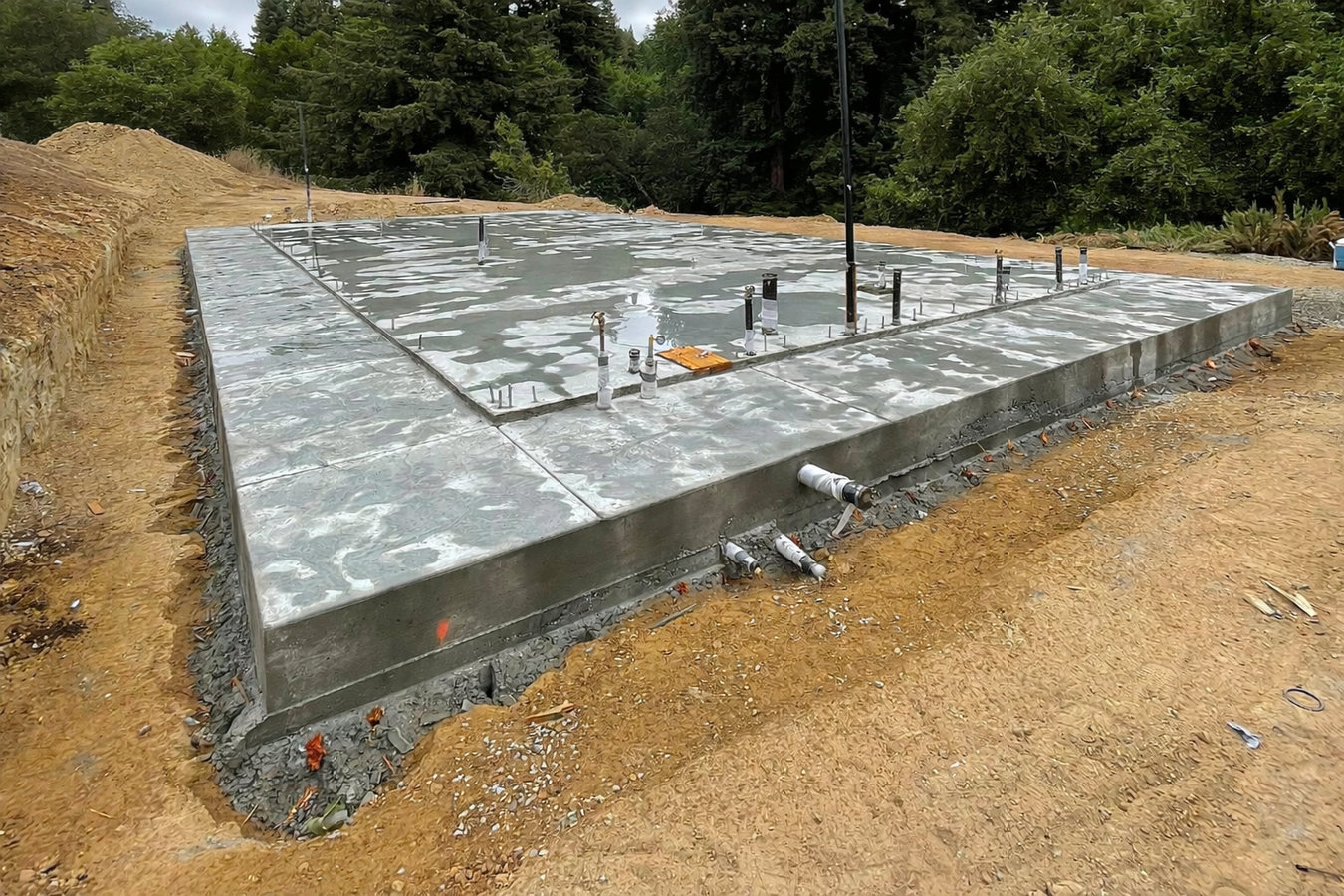
Slab foundations are the standard across Santa Maria - the flat valley terrain and prevailing soil types make them both practical and appropriate for most structures here. If you are adding an ADU, a detached garage, or a workshop on your property, a properly prepared concrete slab foundation accounts for the clay soil movement and drainage conditions at your specific site, not just a generic spec that works anywhere.
A large share of driveways in Santa Maria were poured in the 1970s and 1980s, and they show it - cracking, uneven sections, and joints that have opened up over decades of clay soil movement. Replacing an aging driveway with a properly jointed concrete slab and a compacted base that accounts for Santa Maria's seasonal soil expansion prevents the same cracking pattern from developing in five to ten years. We build driveways in Santa Maria with drainage slope built into the design from the start, so water moves off the surface rather than pooling against the garage or foundation.
Santa Maria's warm, dry summers and mild winters make outdoor living comfortable most of the year - a genuine advantage that a well-built patio makes the most of. Patios on the flat Santa Maria lots need a deliberate drainage slope to prevent water from sitting against the house during winter rain. We design patio surfaces that are graded to drain, sealed against UV degradation, and finished in a texture that does not become slippery when the winter rains arrive.
Retaining walls in Santa Maria are most commonly needed at property boundaries where grade differences exist between lots, at raised planters in front yards, and along side yards where neighbors have different lot elevations. Clay soils hold significant pressure when saturated, which is why retaining walls here need proper drainage installed behind the wall - a dry-stack or improperly drained wall will lean and crack after a wet winter. Concrete walls built with adequate footing depth and a drainage layer behind them hold through the seasonal wet-dry cycle.
Older Santa Maria neighborhoods near downtown and along the main residential corridors have sidewalks that are cracked, lifted by tree roots, and in some cases flagged for repair by the city. The clay-influenced soil that causes driveways to shift also works under sidewalks, creating uneven sections that are tripping hazards. Replacing damaged sections or a full sidewalk run with properly compacted base material and control joints at the right spacing keeps the new surface stable through the seasonal soil movement that will continue indefinitely.
Front entry steps on older Santa Maria homes crack most often at the riser face and the tread nosing - the points where foot traffic concentrates and where concrete is thinnest. Settled slabs can also leave a step that no longer aligns at the correct height, which becomes a trip hazard after years of soil movement. New steps poured to current standards, with the proper footing depth and a denser mix than the original 1960s or 1970s pour, will stay level and intact far longer than patched original steps.
Santa Maria sits on a flat valley floor surrounded by some of California's most productive farmland, and the soil conditions here reflect that agricultural environment. Parts of the Santa Maria Valley have clay-influenced soils that expand when wet in winter and contract as they dry through the long summer. That seasonal swelling and shrinking puts continuous stress on concrete slabs that were not designed to move with it. Driveways and patios poured in the 1970s and 1980s often lacked the proper joint spacing and base depth to accommodate that movement, which is why cracking and uneven sections are so common in the older neighborhoods closer to downtown. A concrete replacement that does not address the root cause - soil movement and drainage - will develop the same problems in a shorter timeframe than the original.
The housing stock in Santa Maria is also more varied than it appears from the street. The city grew rapidly through several different eras, and the building quality and practices from the 1950s through the 1990s varied considerably. Older homes near the city center often have deferred maintenance on their flatwork - cracked approaches, settled slabs near the foundation, and patios that drain toward the house instead of away from it. Newer subdivisions on the north and east sides of the city tend to have newer concrete but can still develop drainage issues when the original grade changes or when clay soils shift under a slab. Understanding which part of Santa Maria a property sits in matters when assessing what a concrete project actually needs.
Our crew works throughout Santa Maria regularly, and we understand the local conditions that affect concrete contractor work here. Permits for concrete work in Santa Maria go through the City of Santa Maria Community Development Department. For projects that affect the public right-of-way - such as driveway aprons connecting to a city street or sidewalk work along the curb - encroachment permits are required in addition to standard building permits, and the timeline for those can differ from a standard residential flatwork permit.
Santa Maria is the largest city in Santa Barbara County, and it covers a wide geographic area - from the older residential streets near Allan Hancock College in the central part of the city, to the Santa Maria Fairpark area, to the newer subdivisions built along Bradley Road and Battles Road on the north and east edges of town. Broadway, Main Street, and Betteravia Road are the main east-west corridors. The difference in home age between the older parts of town and the newer edges is often 30 to 40 years - which means significantly different concrete conditions from one neighborhood to the next.
We also regularly serve Grover Beach and the surrounding Five Cities area to the north, and Lompoc to the southwest, so we understand the range of coastal and valley conditions that span this part of Santa Barbara County.
Reach us by phone or through the contact form and we will respond within one business day. We ask a few brief questions upfront about the project scope, property location in Santa Maria, and any drainage or access concerns so we can come prepared for the site visit.
We visit the property, walk the project area, assess drainage conditions and existing slab or base conditions, and determine whether permits are required. The written estimate we provide breaks out labor, materials, and permit fees separately so there are no surprises on the invoice.
Once you approve the estimate, we handle any required permits with the City of Santa Maria and schedule the work. Most residential pours take one to two days. You do not need to be present for the pour itself, but we ask that someone be reachable by phone during the work day in case a site question comes up.
After the pour, the surface needs 24 to 48 hours before foot traffic and seven days before vehicle loads. We do a final walkthrough to confirm that drainage slope, joint placement, and surface finish match what was agreed on the estimate.
We serve all of Santa Maria - from the older neighborhoods near downtown to the newer subdivisions on the north side of the valley. Call us or submit a form and we will respond within one business day.
(805) 269-8878Santa Maria is the largest city in Santa Barbara County, with a population of around 108,000 people. It sits in the center of the Santa Maria Valley, surrounded by farmland that has made the valley one of California's most productive agricultural regions. The city has a strong identity rooted in its ranching history - Santa Maria is the origin of Santa Maria-style barbecue, a tri-tip grilling tradition that locals take seriously. Major institutions include Allan Hancock College near the center of the city and the Santa Maria Fairpark, which hosts the Santa Barbara County Fair and draws residents from across the valley year-round.
Housing in Santa Maria is a mix of older single-family homes built from the 1950s through the 1980s in the established central and south neighborhoods, and newer tract subdivisions built from the 1990s onward on the north and east edges of the city. About half the housing units are owner-occupied and half are renter-occupied, which means the city has a wide range of maintenance histories from property to property. Nearby, Grover Beach and the Five Cities coastal communities are a short drive up US-101, and Lompoc is roughly 25 miles to the southwest through the Santa Maria Valley.
Durable driveways built to handle daily traffic and coastal weather.
Learn MoreCustom patios that extend your outdoor living space beautifully.
Learn MoreSafe, level sidewalks installed to code for homes and businesses.
Learn MoreProfessional interior floor pours for homes, shops, and warehouses.
Learn MoreSolid entry steps and staircases crafted for lasting curb appeal.
Learn MoreEngineered concrete slabs that give your structure a stable start.
Learn MoreLong-lasting commercial lots that handle heavy loads with ease.
Learn MoreCall us or send a message now - we reply within one business day and serve all of Santa Maria and the surrounding Santa Maria Valley.