Loading...
Serving Morro Bay, CA and surrounding areas. (805) 269-8878
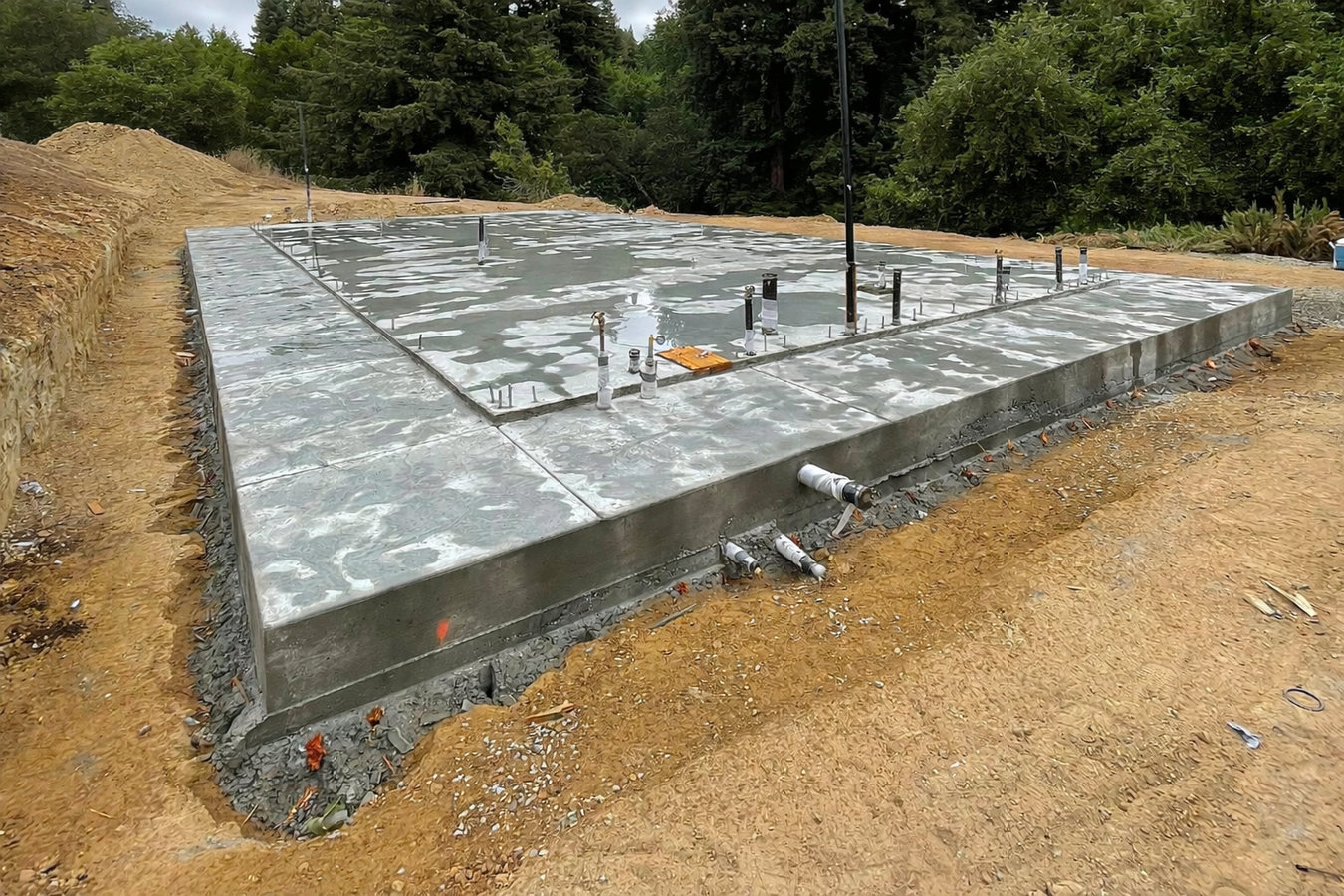
Morro Bay's sandy coastal soils demand more prep work than most. We handle soil compaction, seismic steel, moisture barriers, and permits so your new slab is solid from day one.
Slab foundation building in Morro Bay involves clearing and compacting the site, laying a gravel drainage base and moisture barrier, placing seismic steel reinforcement, and pouring a single concrete pad that becomes both your floor and structural base, with most residential projects completed in three to five active working days once permits are approved.
If you are planning new construction in Morro Bay - a home, an accessory dwelling unit, a garage, or a workshop - the slab foundation is where the whole project starts. Getting it right means more than just pouring concrete: it means accounting for the sandy coastal soils under much of this city, the seismic reinforcement California requires, and the year-round dampness that comes with living near the Pacific. Those factors are specific to this area, and a contractor who does not account for them will leave you with a slab that shifts and cracks within a few years.
If you are adding a slab as part of a larger build, our foundation installation services cover raised foundations and more complex structural work that some properties require.
The clearest reason to call is that you are adding a home, garage, ADU, or workshop and need a solid base to build on. In Morro Bay, where lot sizes are often modest and the terrain varies, a slab foundation is frequently the most practical and cost-effective choice for new construction on a relatively flat site.
Hairline cracks are common and usually minor, but cracks wider than a quarter inch, cracks that run diagonally, or cracks where one side sits higher than the other signal that the slab has shifted. In Morro Bay's sandy coastal soils, this kind of movement can happen gradually over years as the ground beneath settles.
When a slab foundation shifts, the walls and frames above it shift too. If doors that once closed easily now stick, swing open on their own, or leave visible gaps at the corners of window frames, the foundation below may be moving. This is worth a professional look before the problem progresses.
In Morro Bay's damp coastal climate, a slab without an adequate moisture barrier - or an older slab where that barrier has degraded - allows ground moisture to seep upward. Tile that feels damp, buckling laminate, or a persistent mildew smell near the floor are signs that moisture may be coming through from below.
We pour residential slab foundations throughout Morro Bay and the surrounding Central Coast - for new homes, accessory dwelling units, garages, and outbuildings. Every slab we build includes proper soil preparation, a compacted gravel base, a moisture barrier, and seismic steel reinforcement placed to meet California's requirements. For homeowners who need a foundation and are also thinking ahead to the floors above it, we can discuss how the slab ties into our concrete floor installation work, so the surfaces are consistent throughout the finished space.
We also manage the entire permit process with the City of Morro Bay - from the initial application through the required pre-pour inspection and final sign-off. For projects that involve both a slab and deeper structural work at the perimeter, we coordinate with our concrete footings services so both elements are built to the same standard and inspected together.
Best for homeowners building a new home, ADU, or workshop who need a code-compliant foundation from the ground up.
Ideal for Morro Bay homeowners converting garage space or adding a backyard cottage, where the existing floor was not built to residential standards.
Suited to any property in Morro Bay's damp coastal environment where ground moisture management is a priority.
The right fit for any project where the City of Morro Bay permit and inspection process needs to be handled from start to finish.
Much of Morro Bay sits on sandy, loose soils shaped by its position along the Pacific coast and near the estuary. That ground does not compact the same way as the clay or rock found just a few miles inland, and it stays damp for much of the year. A slab poured here needs more extensive subgrade preparation, a robust moisture barrier system, and a concrete mix suited to the salt-air environment - not a standard inland mix delivered and forgotten. The American Concrete Institute sets the national standards for concrete practice, and those standards give a licensed contractor the baseline - but coastal experience is what tells them how to apply those standards to Morro Bay's specific conditions.
California's seismic requirements also raise the bar for every foundation poured in this region. Steel reinforcement and anchor hardware that would be optional elsewhere are mandatory here, and the City of Morro Bay's building inspectors enforce them before concrete is ever placed. Homeowners in Cambria and San Luis Obispo face similar coastal and seismic conditions, and we bring the same preparation to every project across the region.
We reply within one business day and schedule a site visit before giving you any price. Slab quotes based on phone descriptions alone often miss the site-specific factors - soil type, slope, drainage - that most affect cost and timeline in Morro Bay.
We submit the permit application to the City of Morro Bay's Community Development Department on your behalf. Plan for the permit review to take a few weeks - your contractor will give you a realistic schedule based on current city workloads so nothing catches you off guard.
Once the permit is approved, we clear and level the ground, compact the soil in layers, lay the gravel drainage base, and install the plastic moisture barrier. Steel reinforcing bars go in according to the approved plans - this is the phase a city inspector will verify before any concrete is poured.
Concrete is delivered by truck and placed in a single continuous pour. The crew levels and finishes the surface, then covers it to begin curing. The slab needs at least one week before framing can begin, and full strength comes over about 28 days. We walk you through the timeline before we leave the job.
Permits take time on the Central Coast. Reach out now and we will walk you through what your project involves before the season fills up - no obligation, no sales pitch.
(805) 269-8878Morro Bay's sandy ground requires more compaction work and a deeper gravel base than inland sites. We do not cut this step short, because a poorly prepared base is the most common reason a slab cracks and settles within a few years of being poured.
California's earthquake requirements mean additional reinforcement in every slab we pour here. We know what the city inspector checks before the concrete goes in, and we build to that standard on every project - no shortcuts, no surprises at inspection.
We handle the application, the plan submittal, and every required inspection with the City of Morro Bay. You will have a fully signed-off permit before we consider the job complete - a document that protects your investment and matters when you sell.
Living near the ocean means the ground stays damp year-round. We install the moisture barrier correctly on every project, so your floors, walls, and indoor air quality are protected from ground moisture working its way up through the slab.
You can verify any California concrete contractor's license status on the Contractors State License Board website before signing anything. Every credential we bring to a slab project - soil knowledge, seismic compliance, coastal mix design, permit management - is aimed at one outcome: a foundation you never have to think about again after the framing crew arrives.
Raised foundations and crawl space work for Morro Bay properties where a slab alone is not the right fit.
Learn MorePerimeter and post footings that anchor walls, posts, and structures to stable ground beneath the slab.
Learn MorePermit timelines on the Central Coast move slowly - reach out today so we can get your application in before the busy season and lock in your start date.