Retaining Walls & Concrete Masonry
Strong, stable walls that control erosion, manage slopes, and add structure to your landscape.
Why Properties Need Retaining Walls
Retaining walls solve problems that natural slopes cannot handle on their own. If your property sits on a hill or has elevation changes, you face risks from soil erosion, water runoff, and unstable ground. A properly built retaining wall holds back soil, prevents erosion, and creates usable flat space where you had a steep slope. In Morro Bay and coastal areas, we see these issues frequently due to hillside properties and soil conditions that shift with rain and moisture.
Without a retaining wall, slopes can wash away during heavy rain, taking topsoil, plants, and even parts of driveways or foundations with them. The water that runs down an uncontrolled slope often pools near buildings, causing foundation damage and flooding. A retaining wall redirects water flow, stabilizes the soil, and protects your property investment. It also turns unusable sloped land into level areas for gardens, patios, or play spaces.
Common Reasons Property Owners Build Retaining Walls
- Control erosion on sloped yards and hillside properties
- Create level terraces for landscaping or outdoor living areas
- Protect foundations from soil pressure and water damage
- Add privacy and define property boundaries with raised walls
- Improve curb appeal and add visual interest to flat or boring landscapes
We evaluate your property to determine the best wall type, height, and placement for your needs. Every site is different, and the solution that works for one property might not be right for another.
Retaining Wall Options
We build several types of retaining walls depending on your needs, budget, and aesthetic preferences. Poured concrete walls offer maximum strength and durability for tall walls or heavy loads. These walls are reinforced with rebar and built on solid footings that extend below the frost line. Poured walls can be finished with texture or color to match your landscape design. They work well for large projects where appearance and long-term performance matter most.
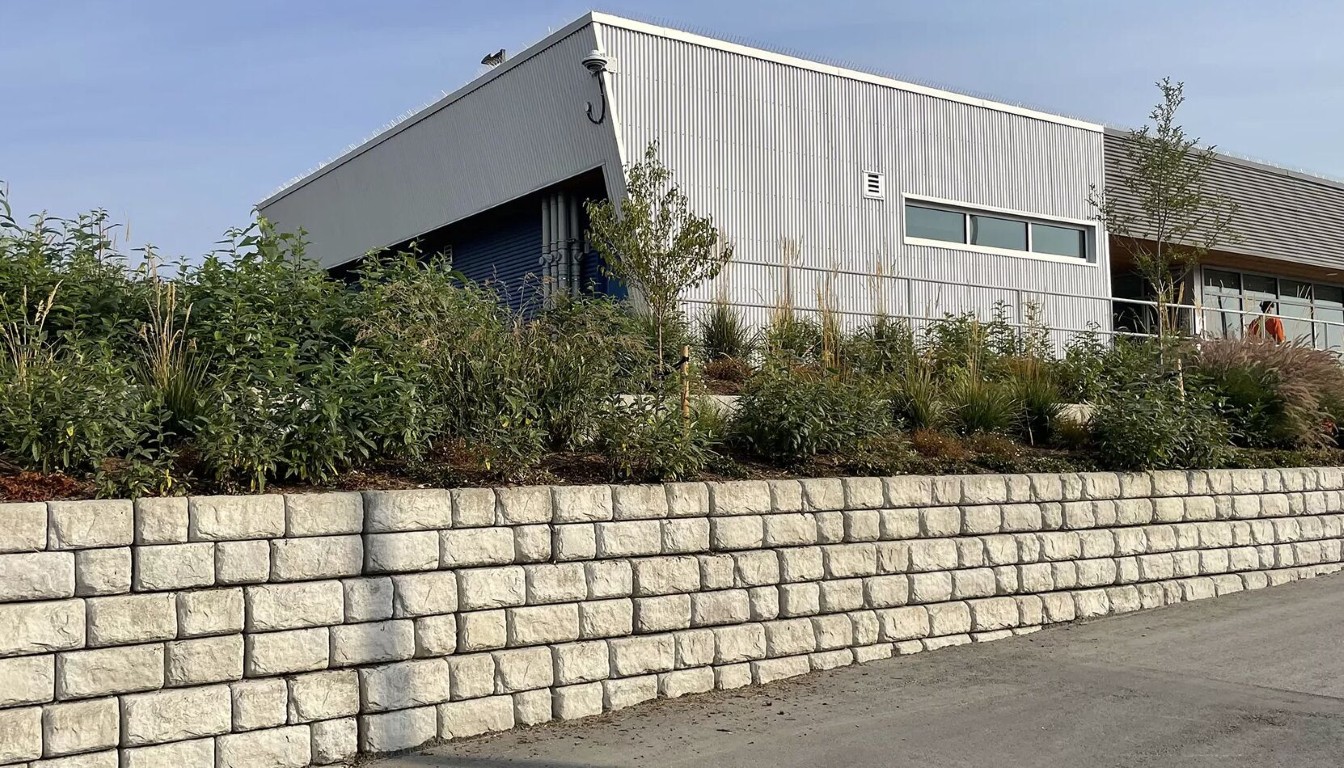
Concrete block walls provide another strong option at a lower cost than poured walls. We stack interlocking concrete blocks and fill the cores with concrete and reinforcement. These walls go up faster than poured walls and still deliver excellent strength. Block walls work well for medium-height applications and can be finished with stucco, stone veneer, or left natural depending on your style. They are a popular choice for residential properties that need solid performance without premium pricing.
For shorter decorative walls, we also build garden walls and planters using concrete masonry. These low walls define spaces, create raised beds for plants, and add structure to your landscape. We custom design these features to complement your existing hardscaping and outdoor living areas.
Engineering for Long-Term Stability
A retaining wall that fails can cause serious property damage. That is why proper engineering and construction matter so much. We start every project by evaluating soil conditions, drainage patterns, and the amount of load the wall needs to support. Walls taller than 4 feet usually require engineering calculations to ensure they can handle the pressure from the soil behind them. We work with engineers when needed to design walls that meet all structural requirements and local building codes.
Drainage is one of the most important factors in wall stability. Water pressure builds up behind retaining walls and can cause them to lean, crack, or fail completely. We install drainage systems including weep holes, gravel backfill, and perforated drain pipes to relieve this pressure and direct water away safely. This hidden work makes the difference between a wall that lasts decades and one that fails within a few years.
We also build walls with proper footings that extend below the frost line and provide a stable base. The footing width and depth depend on wall height and soil conditions. Reinforcement like rebar ties the wall together and adds strength to resist lateral pressure. These details might not be visible in the finished wall, but they determine whether your wall stands strong or becomes a costly repair project in a few years.